ELIGE TUS LIBROS ¡EL ENVÍO ES GRATIS!*
* Envíos a partir de 18€ para España peninsular, Tenerife, Gran Canaria y Mallorca
Libros de Steven Nadler

Un Libro Fraguado En El Infierno
- 344 páginas
- Este ensayo de Steven Nadler no es solo una introducción filosófica al «Tractatus Theologico-politicus» (1670) de Baruj Spinoza. También narra la génesis de este escandaloso Tratado «fraguado en el infierno&ra...
29,00€27,55€26,50€25,17€
Oxford Handbook Of Descartes And Cartesianism
- The Oxford Handbook of Descartes and Cartesianism comprises fifty specially written chapters on Rene Descartes (1596-1650) and Cartesianism, the dominant paradigm for philosophy and science in the seventeenth century, written by an international group...
256,01€243,21€
Menasseh Ben Israel: Rabbi Of Amsterdam
- An illuminating biography of the great Amsterdam rabbi and celebrated popularizer of Judaism in..
26,17€24,86€
Think Least Of Death
- 248 páginas
- "The seventeenth-century Dutch-Jewish philosopher Baruch Spinoza has long been known--and vilified--for his heretical view of God and for the radical determinism he sees governing the cosmos and human freedom. Only recently, however, has he begun...
53,41€50,74€
Spinoza
- Baruch Spinoza (1632-1677) was one of the most important philosophers of all time; he was also one..
61,68€58,60€
Heretics!: The Wondrous (and Dangerous) Beginnings Of Modern Philosophy
- 192 páginas
- This entertaining and enlightening graphic narrative tells the exciting story of the seventeenth-century thinkers who challenged authority-sometimes risking excommunication, prison, and even death-to lay the foundations of modern philosophy and science...
19,70€18,71€
The Philosopher, The Priest, And The Painter: A Portrait Of Descartes
- In the Louvre museum hangs a portrait that is considered the iconic image of Rene Descartes, the
18,90€17,95€153,69€146,01€
The Philosopher, The Priest, And The Painter: A Portrait Of Descartes
- 230 páginas
- In the Louvre museum hangs a portrait that is considered the iconic image of René Descartes, the great seventeenth-century French philosopher. And the painter of the work? The Dutch master Frans Hals--or so it was long believed, until the...
21,58€20,50€
Rembrandt's Jews
- 250 páginas
- There is a popular and romantic myth about Rembrandt and the Jewish people. One of history's greatest artists, we are often told, had a special affinity for Judaism. With so many of Rembrandt's works devoted to stories of the Hebrew Bible, and...
27,52€26,14€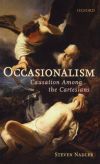
Occasionalism
- 230 páginas
- Steven Nadler presents a collection of essays on the problem of causation in seventeenth-century philosophy. Occasionalism is the doctrine, held by a number of early modern Cartesian thinkers, that created substances are devoid of any true causal powers,...
154,53€146,81€
A Book Forged In Hell: Spinoza's Scandalous Treatise And The Birth Of The Secular Age
- 279 páginas
- When it appeared in 1670, Baruch Spinoza's Theological-Political Treatise was denounced as the most dangerous book ever published--"godless," "full of abominations," "a book forged in hell . . by the devil himself." Religious...
16,85€16,01€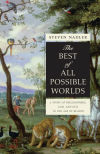
The Best Of All Possible Worlds
- 320 páginas
- In the spring of 1672, German philosopher and mathematician Gottfried Wilhelm Leibniz arrived in Paris, home of France's two greatest philosopher-theologians of the period, Antoine Arnauld and Nicolas de Malebranche. The meeting of these three men...
37,45€35,58€
The Cambridge History Of Jewish Philosophy
- 984 páginas
- The first volume in this comprehensive work is an exploration of the history of Jewish philosophy from its beginnings in antiquity to the early modern period, with a particular emphasis on medieval Jewish thought. Unlike most histories, encyclopedias,...
277,30€263,43€68,15€64,74€
Rabbinic Culture And Its Critics
- 480 páginas
- The influential leaders, institutions, and texts that make up rabbinic culture have held a central place in Judaism since the Middle Ages and have given Jewish cultures across the world remarkably uniform systems of law and doctrines into the modern perio...
71,34€67,78€
Spinoza’s Ethics
- 300 páginas
- Spinoza's Ethics is one of the most remarkable, important, and difficult books in the history of philosophy: a treatise simultaneously on metaphysics, knowledge, philosophical psychology, moral philosophy, and political philosophy. It presents, in...
60,31€57,29€
Spinoza’s Heresy ’ Immortality And The Jewish Mind ’
- 225 páginas
- At the heart of Spinoza's Heresy is a mystery: why was Baruch Spinoza so harshly excommunicated from the Amsterdam Jewish community at the age of twenty-four? In this philosophical sequel to his acclaimed, award-winning biography of the seventeenth-centur...
187,14€177,78€
The Cambridge Companion To Malebranche
- The French philosopher and theologian Nicholas Malebranche was one of the most important thinkers..
44,18€41,97€