Categorías
Recomendador de libros
Dinos qué te gusta y te recomendamos qué leer
Los libros más deseados
Compra online los libros más deseados por nuestros clientes
Novedades en libros. Noviembre de 2026
Todas las novedades editoriales de noviembre de 2026
Listas de libros recomendados
Novedades, sagas y recomendaciones por temáticas

Nuestras librerías
ELIGE TUS LIBROS ¡EL ENVÍO ES GRATIS!*
* Envíos desde 18€ para España y Portugal peninsulares, Tenerife, Gran Canaria y Mallorca
Libros de Robert B. Brandom

Hacerlo Explícito
- 944 páginas
- ¿Qué capacidad deberían tener un chimpancé o un ordenador para que pudiéramos considerarlos capaces de un conocimiento como el nuestro? Tras muchos años de investigaciones, los filósofos han concluido que...
32,90€31,25€
From Empiricism To Expressivism: Brandom Reads Sellars
- 289 páginas
- Wilfrid Sellars ranks as one of the leading critics of empiricism?a philosophical approach to knowledge that seeks to ground it in human sense experience. Robert Brandom clarifies what Sellars had in mind when he talked about moving analytic philosophy...
50,78€48,24€
Expressivism, Pragmatism And Representationalism
- 204 páginas
- Pragmatists have traditionally been enemies of representationalism but friends of naturalism, when naturalism is understood to pertain to human subjects, in the sense of Hume and Nietzsche. In this volume Huw Price presents his distinctive version of this...
112,78€107,14€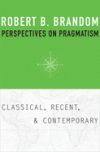
Perspectives On Pragmatism: Classical, Recent, And Contemporary
- 248 páginas
- Pragmatism has been reinvented in every generation since its beginnings in the late nineteenth century. This book, by one of todayÃs most distinguished contemporary heirs of pragmatist philosophy, rereads cardinal figures in that tradition,...
55,62€52,84€
Empiricism And The Philosophy Of Mind
- 181 páginas
- The most important work by one of America's greatest twentieth-century philosophers, Empiricism and the Philosophy of Mind is both the epitome of Wilfrid Sellars' entire philosophical system and a key document in the history of philosophy. First...
42,92€40,77€
Tales Of The Mighty Dead
- 416 páginas
- A work in the history of systematic philosophy that is itself animated by a systematic philosophic aspiration, this book by one of the most prominent American philosophers working today provides an entirely new way of looking at the development of Western...
113,65€107,97€
Making It Explicit
- 762 páginas
- What would something unlike us--a chimpanzee, say, or a computer--have to be able to do to qualify as a possible knower, like us? To answer this question at the very heart of our sense of ourselves, philosophers have long focused on intentionality and...
41,54€39,46€