Categorías
Recomendador de libros
Dinos qué te gusta y te recomendamos qué leer
Los libros más deseados
Compra online los libros más deseados por nuestros clientes
Novedades en libros. Diciembre de 2026
Todas las novedades editoriales de diciembre de 2026
Listas de libros recomendados
Novedades, sagas y recomendaciones por temáticas

Nuestras librerías
ELIGE TUS LIBROS ¡EL ENVÍO ES GRATIS!*
* Envíos desde 18€ para España y Portugal peninsulares, Tenerife, Gran Canaria y Mallorca
Libros de Philip Pettit

El Estado
- 432 páginas
- El Estado ha existido siempre, al menos desde el paso de las sociedades primitivas a las primeras civilizaciones. Pero ¿pueden los Estados actuales resistir a la captación corporativa, la corrupción, el fanatismo religioso y la man&ia...
29,00€27,55€
En Los Términos Del Pueblo
- 408 páginas
- De acuerdo con la teoría política republicana, la libertad del pueblo como conjunto de personas requiere que estas estén públicamente protegidas contra el sometimiento o la dominación en el ejercicio de las libertades...
33,00€31,35€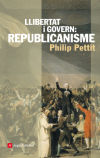
Llibertat I Govern: Republicanisme
- 390 páginas
- El politòleg i filòsof irlandès Philip Pettit exposa en aquesta obra el seu concepte de republicanisme entès com a teoria que recull la tradició de filòsofs de lantiguitat com ara Plató i que se...
28,00€26,60€
The State
- 376 páginas
- The future of our species depends on the state. Can states resist corporate capture, religious zealotry, and nationalist mania? Can they find a way to work together so that the earth heals and its peoples prosper? Or is the state just not up to the task?...
35,59€33,81€
Birth Of Ethics
- Imagine a human society, perhaps in pre-history, in which people were generally of a psychological kind with us, had the use of natural language to communicate with one another, but did not have any properly moral concepts in which to exhort one another...
62,67€59,54€
Group Agency
- 240 páginas
- Are companies, churches, and states genuine agents? Or are they just collections of individual agents that give a misleading impression of unity? This question is important, since the answer dictates how we should go about explaining the behaviour of thes...
62,87€59,72€
On The People’s Terms
- According to republican theory, we are free persons to the extent that we are protected and secured
102,14€97,03€
A Political Philosophy In Public Life
- 216 páginas
- This book examines an unlikely development in modern political philosophy: the adoption by a major national government of the ideas of a living political theorist. When José Luis RodrÃguez Zapatero became Spain's opposition...
44,68€42,44€
On The People’s Terms
- According to republican theory, we are free persons to the extent that we are protected and secured
40,19€38,18€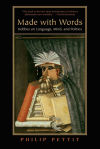
Made With Words
- 183 páginas
- Hobbes's extreme political views have commanded so much attention that they have eclipsed his work on language and mind, and on reasoning, personhood, and group formation. But this work is of immense interest in itself, as Philip Pettit shows in Made...
42,31€40,19€
The Economy Of Esteem:an Essay On Civil And Political Society
- 352 páginas
- However much people want esteem, it is an untradable commodity-- there is no way that you can buy the good opinion of another or sell to others your good opinion of them. And yet esteem is allocated in society according to systematic determinants: people'...
96,37€91,55€71,13€67,57€88,18€83,77€
Theory Of Freedom
- 200 páginas
- This approach to freedom starts from an account of what we mean by describing someone as a free subject; develops an argument as to what it is that makes someone free in that basic sense; and then goes on to derive the implications of the approach for...
67,75€64,36€91,19€86,63€
Three Methods Of Ethics
- During the past decade ethical theory has been in a lively state of development, and three basic..
65,23€61,97€
The Common Mind
- 381 páginas
- What makes human beings intentional and thinking subjects? How does their intentionality and thought connect with their social nature and their communal experience? How do the answers to these questions shape legitimate assumptions in social explanation...
174,78€166,04€