Categorías
Recomendador de libros
Dinos qué te gusta y te recomendamos qué leer
Los libros más deseados
Compra online los libros más deseados por nuestros clientes
Novedades en libros. Noviembre de 2026
Todas las novedades editoriales de noviembre de 2026
Listas de libros recomendados
Novedades, sagas y recomendaciones por temáticas

Nuestras librerías
ELIGE TUS LIBROS ¡EL ENVÍO ES GRATIS!*
* Envíos desde 18€ para España y Portugal peninsulares, Tenerife, Gran Canaria y Mallorca
Libros de Lynn Margulis

El Origen De La Célula
- 150 páginas
- Durante la mayor parte de la Historia de la Vida en nuestro planeta, el paisaje viviente semejó una desolada y remota playa en la que la mirada no pudiera descubrir ni rastro de animales o plantas. Solamente algunas manchas de color en los lodazale...
16,54€15,71€
Los Inicios De La Vida
- 228 páginas
- Durante la mayor parte de la historia de la Tierra, la vida ha sido invisible. Las comunidades bacterianas han modelado la superficie y la atmósfera del planeta a lo largo de miles de millones de años. Aunque estos microorganismos sean insig...
11,95€11,35€
Danza Misteriosa
- 266 páginas
- Tomando como imagen metafórica una bailarina de strip-tease, los autores recorren hacia el pasado: hacia el Homo Erectus, el chimpancé, los reptiles o las bacterias, el camino atravesado por la sexualidad desde que apareció hace millo...
12,00€11,40€
Una Revolución En La Evolución
- 374 páginas
- Les aportacions de Lynn Margulis (Chicago, 1938 - Amberts, 2011) a la biologia són d'una importància inqüestionable. Les seues idees sobre el paper de la simbiosi en l'origen de les cèl·lules nucleades han sigut...
23,00€21,85€
Els Inicis De La Vida
- 210 páginas
- Durante la mayor parte de la historia de la Tierra, la vida ha sido invisible. Las comunidades bacterianas han modelado la superficie y la atmósfera del planeta a lo largo de miles de millones de años. Aunque estos microorganismos sean insig...
13,95€13,25€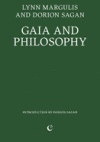
Gaia And Philosophy
- 60 páginas
- In the 1970s, microbiologist Lynn Margulis and atmospheric chemist James Lovelock developed the Gaia theory. Embracing the circular logic of life and engineering systems, the Gaia theory states that Earth is a self-regulating complex system in which life...
10,63€10,10€
Proceedings Of The Fourth Conference On Origins Of Life
- 291 páginas
- This is an edited record of the dialogue of eminent scientists attending the fourth conference in the series of the origins of life, supported by a grant from the Biosciences Program of the National Aeronautics and Space Admini stration. The first...
133,81€127,12€
Proceedings Of The Third Conference On Origins Of Life
- 268 páginas
- This is an edited record of the dialogue of eminent scientists attending the third conference in the series on the Origins of Life, supported by a grant from the Biosciences Program of the National Aeronautics and Space Ad ministration. The first...
133,95€127,25€
Acquiring Genomes: A Theory Of The Origins Of Species
- 256 páginas
- How do new species evolve? Although Darwin identified inherited variation as the creative force in evolution, he never formally speculated where it comes from. His successors thought that new species arise from the gradual accumulation of random mutations...
28,17€26,76€
Symbiotic Planet: A New Look At Evolution
- 176 páginas
- Although Charles Darwin's theory of evolution laid the foundations of modern biology, it did not tell the whole story. Most remarkably, The Origin of Species said very little about, of all things, the origins of species. Darwin and his modern successors...
18,37€17,45€