Categorías
Recomendador de libros
Dinos qué te gusta y te recomendamos qué leer
Los libros más deseados
Compra online los libros más deseados por nuestros clientes
Novedades en libros. Diciembre de 2026
Todas las novedades editoriales de diciembre de 2026
Listas de libros recomendados
Novedades, sagas y recomendaciones por temáticas

Nuestras librerías
ELIGE TUS LIBROS ¡EL ENVÍO ES GRATIS!*
* Envíos desde 18€ para España y Portugal peninsulares, Tenerife, Gran Canaria y Mallorca
Libros de Ian Morris

Geografía Y Destino
- 720 páginas
- ¿Cómo puede moldear la geografía el destino de un territorio? ¿Vivir físicamente aislado del resto del mundo es siempre una desventaja o puede convertirse en una ventaja? ¿Cómo nos ayuda nuestra adaptabilid...
37,95€36,05€
¿por Qué Manda Occidente Por Ahora?
- 992 páginas
- Occidente desencadenó en su revolución industrial la impresionante energía del vapor y el carbón y, al hacerlo, cambió el mundo para siempre. Fábricas, ferrocarriles y barcos de guerra provocaron que Occidente...
18,95€18,00€
Cazadores, Campesinos Y Carbón
- 432 páginas
- Después del éxito de ¿Por qué manda Occidente. por ahora?, Ian Morris aborda la ambiciosa tarea de explicar la evolución de los valores de las sociedades humanas desde la prehistoria hasta la actualidad. Este es un libro...
19,90€18,90€
Guerra, ¿para Qué Sirve?
- 640 páginas
- En este fascinante libro, el historiador y arqueólogo Ian Morris investiga el papel de la guerra a lo largo de la historia. Partiendo de esa premisa, Guerra, ¿para qué sirve? nos ofrece un sensacional relato de la violencia a trav&eac...
22,50€21,37€
¿por Qué Manda Occidente Por Ahora?
- 864 páginas
- Occidente desencadenó en su revolución industrial la impresionante energía del vapor y el carbón y, al hacerlo, cambió el mundo para siempre. Fábricas, ferrocarriles y barcos de guerra provocaron que Occidente...
19,50€18,53€
Cazadores, Campesinos Y Carbón: Una Historia De Los Valores De Las Sociedades Humanas
- 448 páginas
- El profesor Ian Morris, catedrático de Clásicas en el Stanford Archaeology Center, nos ofrece un imprescindible volumen sobre la historia de los valores humanos, complementario y compañero de su primer libro, en el que explora con...
26,50€25,17€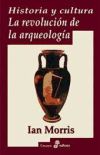
Historia Y Cultura. La Revolución De La Arquéología
- 592 páginas
- Ian Morris está considerado como uno de los más destacados arqueólogos en activo y en este ensayo realiza un sugerente y potente estudio que combina la teoría y la práctica y nos ofrece una nueva interpretación...
36,50€34,68€25,27€24,01€
Foragers, Farmers, And Fossil Fuels
- 394 páginas
- Most people in the world today think democracy and gender equality are good, and that violence and wealth inequality are bad. But most people who lived during the 10,000 years before the nineteenth century thought just the opposite. Drawing on archaeology...
29,13€27,67€25,38€24,11€
The Little Magazine In Contemporary America
- Little magazines have often showcased the best new writing in America. Historically, these..
40,15€38,15€
War: What Is It Good For?
- 495 páginas
- War is one of the greatest human evils. It has ruined livelihoods, provoked unspeakable atrocities and left countless millions dead. It has caused economic chaos and widespread deprivation. But, argues bestselling historian Ian Morris, in the very long...
18,95€18,00€
Morris, I: Foragers, Farmers, And Fossil Fuels
- 400 páginas
- "Most people in the world today think democracy and gender equality are good, and that violence and wealth inequality are bad. But most people who lived during the 10,000 years before the nineteenth century thought just the opposite. Drawing on archaeolog...
25,67€24,38€
When Bad Things Happen To Rich People
- 212 páginas
- When Bad Things Happen to Rich People is a novel of social satire, a black comedy set in Chicago in the summer of 1995. The novel?s protagonist, Nix Walters, is an adjunct instructor of English at a communications college in the loop with few prospects...
20,49€19,46€
The Measure Of Civilization
- 400 páginas
- In the past thirty years, there have been fierce debates over how civilizations develop and why the West became so powerful. The Measure of Civilization presents a brand-new way of investigating these questions and provides new tools for assessing the...
29,10€27,64€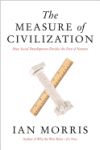
The Measure Of Civilization: How Social Development Decides The Fate Of Nations
- 381 páginas
- In the past thirty years, there have been fierce debates over how civilizations develop and why the West became so powerful. The Measure of Civilization presents a brand-new way of investigating these questions and provides new tools for assessing the...
61,66€58,58€
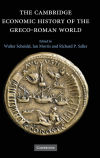
The Cambridge Economic History Of The Greco-roman World
- 960 páginas
- In this, the first comprehensive one-volume survey of the economies of classical antiquity, twenty-eight chapters summarise the current state of scholarship in their specialised fields and sketch new directions for research. The approach taken is both...
104,32€99,11€
Why The West Rules--for Now
- 750 páginas
- Sometime around 1750, English entrepreneurs unleashed the astounding energies of steam and coal, and the world was forever changed. The emergence of factories, railroads, and gunboats propelled the West's rise to power in the nineteenth century, and...
27,08€25,73€
Why The West Rules - For Now
- 750 páginas
- Why does the West rule? In this magnum opus, eminent Stanford polymath Ian Morris answers this..
18,95€18,00€344,94€327,69€