ELIGE TUS LIBROS ¡EL ENVÍO ES GRATIS!*
* Envíos desde 18€ para España y Portugal peninsulares, Tenerife, Gran Canaria y Mallorca
Libros de Ian Hacking
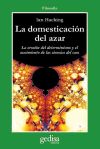
La Domesticación Del Azar
- 368 páginas
- La contingencia y el caos ocupan intensamente a la actual investigación científica. Se trata de una nueva revolución de la ciencia que está cambiando de manera sustancial el concepto de la naturaleza y que subvierte los princip...
31,90€30,30€27,90€26,51€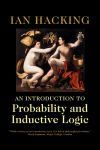
An Introduction To Probability And Inductive Logic
- 322 páginas
- This is an introductory textbook on probability and induction written by one of the world's foremost philosophers of science. The book has been designed to offer maximal accessibility to the widest range of students (not only those majoring in philosophy)...
130,64€124,11€33,40€31,73€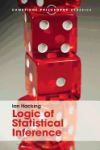
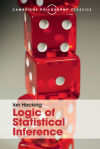
Logic Of Statistical Inference
- 226 páginas
- One of Ian Hacking's earliest publications, this book showcases his early ideas on the central concepts and questions surrounding statistical reasoning. He explores the basic principles of statistical reasoning and tests them, both at a philosophical...
100,24€95,22€
Why Is There Philosophy Of Mathematics At All?
- This truly philosophical book takes us back to fundamentals - the sheer experience of proof, and..
100,24€95,22€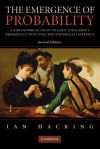
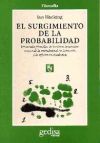
The Emergence Of Probability
- 209 páginas
- Historical records show that there was no real concept of probability in Europe before the mid-seventeenth century, although the use of dice and other randomizing objects was commonplace. Ian Hacking presents a philosophical critique of early ideas about...
35,93€34,14€36,07€34,26€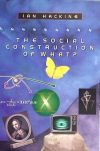
The Social Construction Of What?
- 278 páginas
- Lost in the raging debate over the validity of social construction is the question of what, precisely, is being constructed. Facts, gender, quarks, reality? Is it a person? An object? An idea? A theory? Each entails a different notion of social constructi...
29,13€27,67€
Historical Ontology
- 288 páginas
- Focuses on the interactions between what there is and our concepts thereof.
27,19€25,83€
An Introduction To Probability And Inductive Logic
- 302 páginas
- This is an introductory textbook on probability and induction written by one of the world's foremost philosophers of science. The book has been designed to offer maximal accessibility to the widest range of students (not only those majoring in philosophy)...
64,47€61,25€
The Taming Of Chance
- 264 páginas
- In this important new study Ian Hacking continues the enquiry into the origins and development of certain characteristic modes of contemporary thought undertaken in such previous works as his best selling Emergence of Probability. Professor Hacking shows...
39,29€37,33€
Representing And Intervening
- 287 páginas
- This 1983 book is a lively and clearly written introduction to the philosophy of natural science, organized around the central theme of scientific realism. It has two parts. 'Representing' deals with the different philosophical accounts of scientific...
41,85€39,76€