Categorías
Recomendador de libros
Dinos qué te gusta y te recomendamos qué leer
Los libros más deseados
Compra online los libros más deseados por nuestros clientes
Novedades en libros. Noviembre de 2026
Todas las novedades editoriales de noviembre de 2026
Listas de libros recomendados
Novedades, sagas y recomendaciones por temáticas

Nuestras librerías
ELIGE TUS LIBROS ¡EL ENVÍO ES GRATIS!*
* Envíos desde 18€ para España y Portugal peninsulares, Tenerife, Gran Canaria y Mallorca
Libros de Hans Blumenberg
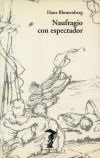
Naufragio Con Espectador
- 117 páginas
- Hans Blumenberg (Lübeck, 1920) ha publicado, entre otros libros, Die Legitimität der Neuzeit (1966, 1977), Die Lesbarkeit der Welt (1983) y Die Sorge geht über den Fluss (1987). Este último ha aparecido recientemente en castellano:...
12,90€12,25€
Paradigmas Para Una Metaforología
- 188 páginas
- Considerada por algunos estudiosos como auténtico «manifiesto» del proyecto blumberguiano, Paradigmas para una metaforología es, en buena medida, un intento de responder a la pregunta ¿bajo qué presupuestos pueden...
20,00€19,00€
Literatura, Estética Y Nihilismo
- 165 páginas
- Las obras de madurez de Hans Blumenberg fueron precedidas por diversos trabajos en los que se fue gestando su proyecto de una metaforología, en torno a la legitimidad de las metáforas en el lenguaje filosófico. A esta fase inicial...
15,00€14,25€
Historia Del Espíritu De La Técnica
- 172 páginas
- En el legado intelectual del autor apareció una carpeta con la signatura «GT», que con tenía alguno de los breves escritos aquí recogidos acerca de la historia espiritual de la técnica. Aún está por...
16,00€15,20€
El Hombre De La Luna
- 268 páginas
- En la historia espiritual del siglo XX no se puede imaginar una constelación más sorprendente como la establecida entre Ernst Jünger y Hans Blumenberg. Ernst Jünger pertenece a ese tipo de autores contemporáneos capaces de...
18,00€17,10€
Salidas De Caverna
- 680 páginas
- Todo cuanto la imaginación de las cavernas haya podido lograr alguna vez está aquí reunido para una historia de salida y ascenso a la realidad plena, una realidad aliada con aquello que, justamente en este punto, Platón parece...
24,90€23,65€
Fuentes, Corrientes, Icebergs
- 342 páginas
- No se puede entrar dos veces en el mismo río, pero se vuelve a la misma orilla, incluso si uno se ha dejado llevar por la corriente para seguir siendo uno con el mismo río, al menos por un tiempo."
25,00€23,75€17,46€16,59€
History, Metaphors, Fables: A Hans Blumenberg Reader
- 609 páginas
- History, Metaphors, Fables collects the central writings by Hans Blumenberg and covers topics such as on the philosophy of language, metaphor theory, non-conceptuality, aesthetics, politics, and literary studies. This landmark volume demonstrates Blumenbe...
43,46€41,29€
Rigorism Of Truth: "moses The Egyptian" And Other Writings On Freud And Arendt
- 97 páginas
- In "Moses the Egyptian"--the centerpiece of Rigorism of Truth , the German philosopher Hans Blumenberg addresses two defining figures in the intellectual history of the twentieth century: Sigmund Freud and Hannah Arendt. Unpublished during his...
175,30€166,54€
Rigorism Of Truth: "moses The Egyptian" And Other Writings On Freud And Arendt
- 97 páginas
- In "Moses the Egyptian"--the centerpiece of Rigorism of Truth , the German philosopher Hans Blumenberg addresses two defining figures in the intellectual history of the twentieth century: Sigmund Freud and Hannah Arendt. Unpublished during his...
50,72€48,18€
Schriften Zur Technik
- 301 páginas
- Hans Blumenberg schwebte in den 1950er und 1960er Jahren eine Verbindung von Technik- und Zeitphilosophie vor, auf die bis heute nur selten Bezug genommen wird. Das mag daran liegen, dass er nie eine »Philosophie der Technik« geschrieben hat...
21,38€20,31€
Goethe Zum Beispiel
- 245 páginas
- Für Hans Blumenberg bedeutete Fragen nach Goethe eine unablässige, vor allem aber genußvolle Auseinandersetzung. In seinem facettenreichen, aus dem Nachlaß veröffentlichten Goethe-Buch zu Leben, Werk und Wirkung entsteht ein...
24,29€23,08€34,99€33,24€17,49€16,62€
Care Crosses The River
- In this collection of short meditations on various topics, Hans Blumenberg eschews academic..
20,05€19,05€
The Legitimacy Of The Modern Age
- 712 páginas
- In this major work, Blumenberg takes issue with Karl Löwith's well-known thesis that the idea of progress is a secularized version of Christian eschatology, which promises a dramatic intervention that will consummate the history of the...
96,72€91,88€27,22€25,86€15,55€14,77€23,33€22,16€


