Categorías
Recomendador de libros
Dinos qué te gusta y te recomendamos qué leer
Los libros más deseados
Compra online los libros más deseados por nuestros clientes
Novedades en libros. Noviembre de 2026
Todas las novedades editoriales de noviembre de 2026
Listas de libros recomendados
Novedades, sagas y recomendaciones por temáticas

Nuestras librerías
ELIGE TUS LIBROS ¡EL ENVÍO ES GRATIS!*
* Envíos desde 18€ para España y Portugal peninsulares, Tenerife, Gran Canaria y Mallorca
Libros de Gerd Gigerenzer

Cognition As Intuitive Statistics
- Originally published in 1987, this title is about theory construction in psychology. Where theories come from, as opposed to how they become established, was almost a no-manâs land in the history and philosophy of science at the time....
218,61€207,68€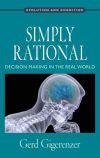
Simply Rational
- Statistical illiteracy can have an enormously negative impact on decision making. This volume of collected papers brings together applied and theoretical research on risks and decision making across the fields of medicine, psychology, and economics. Colle...
156,69€148,85€
Calculated Risks
- 310 páginas
- At the beginning of the twentieth century, H. G. Wells predicted that statistical thinking would be as necessary for citizenship in a technological world as the ability to read and write. But in the twenty-first century, we are often overwhelmed by a baff...
18,97€18,02€
Better Doctors, Better Patients, Better Decisions
- 416 páginas
- Contrary to popular opinion, one of the main problems in providing uniformly excellent health care is not lack of money but lack of knowledgeâon the part of both doctors and patients. The studies in this book show that many doctors and...
38,12€36,21€65,47€62,19€
Evolution And Cognition Series
- 344 páginas
- Where do new ideas come from? What is social intelligence? Why do social scientists perform mindless statistical rituals? This vital book is about rethinking rationality as adaptive thinking: to understand how minds cope with their environments, both ecol...
105,48€100,20€
Experts In Science And Society
- Taking the viewpoint that experts are consulted when there is something important at stake for an individual, a group, or society at large, this volume explores expertise as a relational concept. In order to be culturally comparative, this volume includes...
133,29€126,62€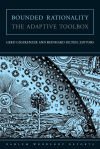
Bounded Rationality
- 394 páginas
- In a complex and uncertain world, humans and animals make decisions under the constraints of limited knowledge, resources, and time. Yet models of rational decision making in economics, cognitive science, biology, and other fields largely ignore these...
48,14€45,73€
The Empire Of Chance
- 340 páginas
- This book tells how quantitative ideas of chance have transformed the natural and social sciences as well as everyday life over the past three centuries. A continuous narrative connects the earliest application of probability and statistics in gambling...
41,62€39,54€
