ELIGE TUS LIBROS ¡EL ENVÍO ES GRATIS!*
* Envíos desde 18€ para España y Portugal peninsulares, Tenerife, Gran Canaria y Mallorca
Libros de Dorion Sagan
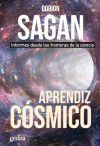
Aprendiz Cósmico. Informes Sobre Las Fronteras De La Ciencia
- 336 páginas
- En este caleidoscópico y brillante libro, una multiplicidad de campos de la ciencia entre ellos la genética, la neurobiología, la astrofísica o la termodinámica se dan cita con la indagación filos&oacu...
25,90€24,60€19,00€18,05€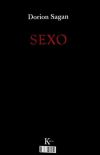
Sexo / Muerte
- 312 páginas
- Sexo: Dorion Sagan nos lleva a dar un irreverente y divertido paseo por la ciencia, la filosofía y la literatura de uno de los temas que más han obsesionado a la humanidad: el sexo. Entrelazando la biología evolutiva con lecturas rela...
18,00€17,10€
Danza Misteriosa
- 266 páginas
- Tomando como imagen metafórica una bailarina de strip-tease, los autores recorren hacia el pasado: hacia el Homo Erectus, el chimpancé, los reptiles o las bacterias, el camino atravesado por la sexualidad desde que apareció hace millo...
12,00€11,40€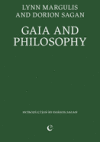
Gaia And Philosophy
- 60 páginas
- In the 1970s, microbiologist Lynn Margulis and atmospheric chemist James Lovelock developed the Gaia theory. Embracing the circular logic of life and engineering systems, the Gaia theory states that Earth is a self-regulating complex system in which life...
9,66€9,18€
Cosmic Apprentice: Dispatches From The Edges Of Science
- In the pursuit of knowledge, Dorion Sagan argues in this dazzlingly eclectic, rigorously..
22,19€21,08€
Acquiring Genomes: A Theory Of The Origins Of Species
- 256 páginas
- How do new species evolve? Although Darwin identified inherited variation as the creative force in evolution, he never formally speculated where it comes from. His successors thought that new species arise from the gradual accumulation of random mutations...
28,17€26,76€15,89€15,10€
Microcosmos
- 304 páginas
- " Microcosmos is nothing less than the saga of the life of the planet. Lynn Margulis and Dorion Sagan have put it all together, literally, in this extraordinary book, which is unlike any treatment of evolution for a general readership that I have...
38,63€36,69€
The Gift
- 384 páginas
- Considered by many to be the greatest Russian novel of the twentieth century. â¢Â  An interweaving of the effects of life and memory, tradition and heritage, upon art, the book tells of Fyodor Godunov-Cherdyntsev,...
15,48€14,70€
Origins Of Sex: Three Billion Years Of Genetic Recombination
- 258 páginas
- A fascinating and detailed examination of the evolution--and occasional devolution--of sexuality in microorganisms and more complex forms of life. Margulis and Sagan trace sex from its inauspicious beginnings in bacteria threatened by ultraviolet radiatio...
42,82€40,68€