Categorías
Recomendador de libros
Dinos qué te gusta y te recomendamos qué leer
Los libros más deseados
Compra online los libros más deseados por nuestros clientes
Novedades en libros. Diciembre de 2026
Todas las novedades editoriales de diciembre de 2026
Listas de libros recomendados
Novedades, sagas y recomendaciones por temáticas

Nuestras librerías
ELIGE TUS LIBROS ¡EL ENVÍO ES GRATIS!*
* Envíos desde 18€ para España y Portugal peninsulares, Tenerife, Gran Canaria y Mallorca
Libros de Division on Engineering and Physical Sciences

Next Generation Earth Systems Science At The National Science Foundation
- 136 páginas
- The National Science Foundation (NSF) has played a key role over the past several decades in advancing understanding of Earth's systems by funding research on atmospheric, ocean, hydrologic, geologic, polar, ecosystem, social, and engineering-related...
22,83€21,69€
Views Of The U.s. National Academies Of Sciences, Engineering, And Medicine On Agenda Items At Issue At The World Radiocommunication Conference 2023
- The radio frequency spectrum is a limited resource for which there is an ever-increasing demand..
41,08€39,03€
Effectiveness And Efficiency Of Defense Environmental Cleanup Activities Of Doe's Office Of Environmental Management
- 158 páginas
- The U.S. Department of Energy (DOE) and its predecessor agencies have conducted activities to develop atomic energy for civilian and defense purposes since the initiation of the World War II Manhattan Project in 1942. These activities took place at large...
45,24€42,98€
Accelerating Decarbonization Of The U.s. Energy System
- 268 páginas
- The world is transforming its energy system from one dominated by fossil fuel combustion to one with net-zero emissions of carbon dioxide (CO2), the primary anthropogenic greenhouse gas. This energy transition is critical to mitigating climate change,...
70,67€67,13€
Airborne Platforms To Advance Nasa Earth System Science Priorities
- 228 páginas
- The National Aeronautics and Space Administration (NASA) and other U.S. science research agencies operate a fleet of research aircraft and other airborne platforms that offer diverse capabilities. To inform NASA's future investments in airborne platforms,...
58,76€55,82€
An Assessment Of Illness In U.s. Government Employees And Their Families At Overseas Embassies
- 76 páginas
- In late 2016, U.S. Embassy personnel in Havana, Cuba, began to report the development of an unusual set of symptoms and clinical signs. For some of these patients, their case began with the sudden onset of a loud noise, perceived to have directional featu...
41,08€39,03€
A Quadrennial Review Of The National Nanotechnology Initiative
- 138 páginas
- Global advances in medicine, food, water, energy, microelectronics, communications, defense, and other important sectors of the economy are increasingly driven by discoveries in nanoscience and the development of nanotechnologies. Engaging the nanoscience...
58,76€55,82€Assessing The Risks Of Integrating Unmanned Aircraft Systems (uas) Into The National Airspace System
- When discussing the risk of introducing drones into the National Airspace System, it is..
63,39€60,22€
Life-cycle Decisions For Biomedical Data
- 184 páginas
- Biomedical research results in the collection and storage of increasingly large and complex data sets. Preserving those data so that they are discoverable, accessible, and interpretable accelerates scientific discovery and improves health outcomes, but...
68,12€64,71€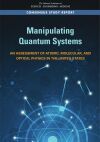
Manipulating Quantum Systems
- 314 páginas
- The field of atomic, molecular, and optical (AMO) science underpins many technologies and continues to progress at an exciting pace for both scientific discoveries and technological innovations. AMO physics studies the fundamental building blocks of funct...
76,91€73,06€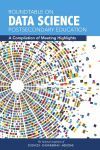
Roundtable On Data Science Postsecondary Education
- 222 páginas
- Established in December 2016, the National Academies of Sciences, Engineering, and Medicine's Roundtable on Data Science Postsecondary Education was charged with identifying the challenges of and highlighting best practices in postsecondary data science...
54,60€51,87€
Planning For Long-term Use Of Biomedical Data
- 92 páginas
- Biomedical research data sets are becoming larger and more complex, and computing capabilities are expanding to enable transformative scientific results. The National Institutes of Health's (NIH's) National Library of Medicine (NLM) has the unique...
36,36€34,54€
Safeguarding The Bioeconomy
- 392 páginas
- Research and innovation in the life sciences is driving rapid growth in agriculture, biomedical science, information science and computing, energy, and other sectors of the U.S. economy. This economic activity, conceptually referred to as the bioeconomy,...
68,12€64,71€
Environmental Engineering For The 21st Century
- 120 páginas
- Environmental engineers support the well-being of people and the planet in areas where the two intersect. Over the decades the field has improved countless lives through innovative systems for delivering water, treating waste, and preventing and remediati...
41,08€39,03€
Isc Security Design Criteria For New Federal Office Buildings And Major Modernization Projects
- 64 páginas
- In November 1999, GSA and the U.S. Department of State convened a symposium to discuss the apparently conflicting objectives of security from terrorist attack and the design of public buildings in an open society. The symposium sponsors rejected the notio...
42,60€40,47€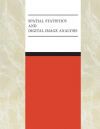
Spatial Statistics And Digital Image Analysis
- 256 páginas
- Spatial statistics is one of the most rapidly growing areas of statistics, rife with fascinating research opportunities. Yet many statisticians are unaware of those opportunities, and most students in the United States are never exposed to any course work...
58,76€55,82€U.s.-european Collaboration In Space Science
- U.S.-European Collaboration in Space Science reviews the past 30 years of space-based..
44,67€42,43€
Reproducibility And Replicability In Science
- One of the pathways by which the scientific community confirms the validity of a new scientific..
55,40€52,63€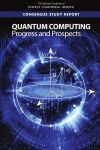
Quantum Computing
- 272 páginas
- Quantum mechanics, the subfield of physics that describes the behavior of very small (quantum) particles, provides the basis for a new paradigm of computing. First proposed in the 1980s as a way to improve computational modeling of quantum systems, the...
49,87€47,37€
Strategic Investments In Instrumentation And Facilities For Extraterrestrial Sample Curation And Analysis
- The United States possesses a treasure-trove of extraterrestrial samples that were returned to..
58,76€55,82€