Categorías
Recomendador de libros
Dinos qué te gusta y te recomendamos qué leer
Los libros más deseados
Compra online los libros más deseados por nuestros clientes
Novedades en libros. Diciembre de 2026
Todas las novedades editoriales de diciembre de 2026
Listas de libros recomendados
Novedades, sagas y recomendaciones por temáticas

Nuestras librerías
ELIGE TUS LIBROS ¡EL ENVÍO ES GRATIS!*
* Envíos desde 18€ para España y Portugal peninsulares, Tenerife, Gran Canaria y Mallorca
Libros de Blaise Pascal
56,79€53,95€
The Heart Of Pascal. H.f. Stewart
- Originally published in 1945, this book constitutes the companion volume to The Apology of Pascal..
57,26€54,40€19,44€18,47€11,55€10,98€
Pensees
- Blaise Pascals famous Pensées (Thoughts) is, in reality, a collection of notes he made for a book he never wrote. Many of the thoughts are fragmentary in nature, and the sectionalising and numbering was devised by a later editor. Yet they contain...
35,57€33,79€
Pensees
- 764 páginas
- "Cette édition des Pensées veut être aussi fidèle que possible aux intentions de Pascal, en particulier par l'établissement du texte entièrement relu sur le manuscrit...
12,15€11,54€
Thoughts, Letters & Minor Works
- Translator names not noted above: Mary L. Booth and Orlando W. Wight.Originally published between 1909 and 1917 under the name "Harvard Classics," this stupendous 51-volume set-a collection of the greatest writings from literature, philosophy,...
41,28€39,21€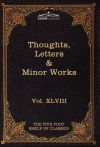
Thoughts, Letters & Minor Works
- Translator names not noted above: Mary L. Booth and Orlando W. Wight.Originally published between 1909 and 1917 under the name "Harvard Classics," this stupendous 51-volume set-a collection of the greatest writings from literature, philosophy,...
51,48€48,91€
Pensees
- 208 páginas
- Blaise Pascal set out to produce a monumental work of Christian apologetics but his untimely death meant that only his fragmentary notes--his thoughts--would be passed on to future generations. The 'random' notes of most people would not be worth...
14,18€13,47€
The Mind On Fire
- 336 páginas
- Blaise Pascal, the remarkable seventeenth-century mathematician, physicist, and religious thinker, rigorously refutes the belief that to become a Christian you must first commit intellectual suicide. He wrote to communicate the Christian faith to the skep...
21,46€20,38€
Great Ideas Human Happiness
- 128 páginas
- Created by the seventeenth-century philosopher and mathematician Pascal, the essays contained in Human Happiness are a curiously optimistic look at whether humans can ever find satisfaction and real joy in life â or whether a belief in...
8,65€8,22€
The Provincial Letters Of Blaise Pascal (1847)
- This scarce antiquarian book is a facsimile reprint of the original. Due to its age, it may contain imperfections such as marks, notations, marginalia and flawed pages. Because we believe this work is culturally important, we have made it available as...
26,79€25,45€
Thoughts On Religion And Other Subjects
- ""Thoughts On Religion And Other Subjects"" is a collection of philosophical musings by the French..
38,83€36,89€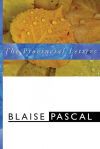
Provincial Letters
- The Provincial letters are a series of eighteen letters written by French philosopher and..
23,04€21,88€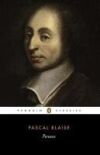
Pensees
- 368 páginas
- Blaise Pascal, the precociously brilliant contemporary of Descartes, was a gifted mathematician and physicist, but it is his unfinished apologia for the Christian religion upon which his reputation now rests. The Penseés is a collection of...
11,73€11,14€96,52€91,70€


