Categorías
Recomendador de libros
Dinos qué te gusta y te recomendamos qué leer
Los libros más deseados
Compra online los libros más deseados por nuestros clientes
Novedades en libros. Noviembre de 2026
Todas las novedades editoriales de noviembre de 2026
Listas de libros recomendados
Novedades, sagas y recomendaciones por temáticas

Nuestras librerías
ELIGE TUS LIBROS ¡EL ENVÍO ES GRATIS!*
* Envíos desde 18€ para España y Portugal peninsulares, Tenerife, Gran Canaria y Mallorca
Libros de Paul Ricoeur

Evil
- 72 páginas
- What is the origin of evil? Where does what we term evil come from? According to Paul Ricoeur, to think through evil is to think through fallibility; because human freedom is summed up as existence prior to evil. Deriving from a lecture given in Lausanne...
27,77€26,38€
Conflict Of Interpretations
- 508 páginas
- Paul Ricoeur (1913-) is Professor Emeritus of Philosophy at the University of Chicago and Dean of..
65,40€62,13€
On Translation
- Paul Ricoeur was one of the most important philosophers of the twentieth century. In this short and accessible book, he turns to a topic at the heart of much of his work: What is translation and why is it so important?
54,48€51,75€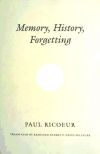
Memory, History, Forgetting
- 624 páginas
- Why do major historical events such as the Holocaust occupy the forefront of the collective consciousness, while profound moments such as the Armenian genocide, the McCarthy era, and France's role in North Africa stand distantly behind? Is it possible...
45,26€43,00€
Freud And Philosophy
- If Paul Ricoeur is correct in seeing the various currents of contemporary philosophy all converging
73,09€69,44€
Oneself As Another
- Paul Ricoeur has been hailed as one of the most important thinkers of the century. "Oneself as Another," the clearest account of his "philosophical ethics," substantiates this position and lays the groundwork for a metaphysics of morals....
42,94€40,79€
La Naturaleza Y La Norma: Lo Que Nos Hace Pensar
- 318 páginas
- Inculcar en los niños las reglas elementales de la ética, como hacían los griegos de la Antigüedad mediante el modelo de sus hombres ilustres: he aquí una necesidad de primer orden en este mundo contemporáneo, que...
28,00€26,60€
Just
- The essays in this book contain some of Paul Ricoeur's most fascinating ruminations on the nature..
36,14€34,33€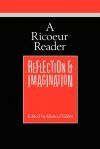
A Ricoeur Reader
- Paul Ricoeur is one of the most important modern literary theorists and a philosopher of world renown. This collection brings together his published articles, papers, reviews, and interviews that focus on literary theory and criticism.
63,06€59,90€
Time And Narrative. Volumen 1
- 281 páginas
- Discusses the conflict between subjective time and historical time, looks at how fiction and historical writings create a model of temporal experience, and considers the question of sense and reference.
27,85€26,46€
Time And Narrative. Volumen 2
- 216 páginas
- In volume 1 of this three-volume work, Paul Ricoeur examined the relations between time and narrative in historical writing. Now, in volume 2, he examines these relations in fiction and theories of literature.
30,18€28,67€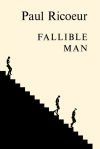
Fallible Man
- The most accessible of Ricoeurâs early texts, Fallible Man offers an introduction to phenomenological method.
46,43€44,10€21,70€20,62€
